
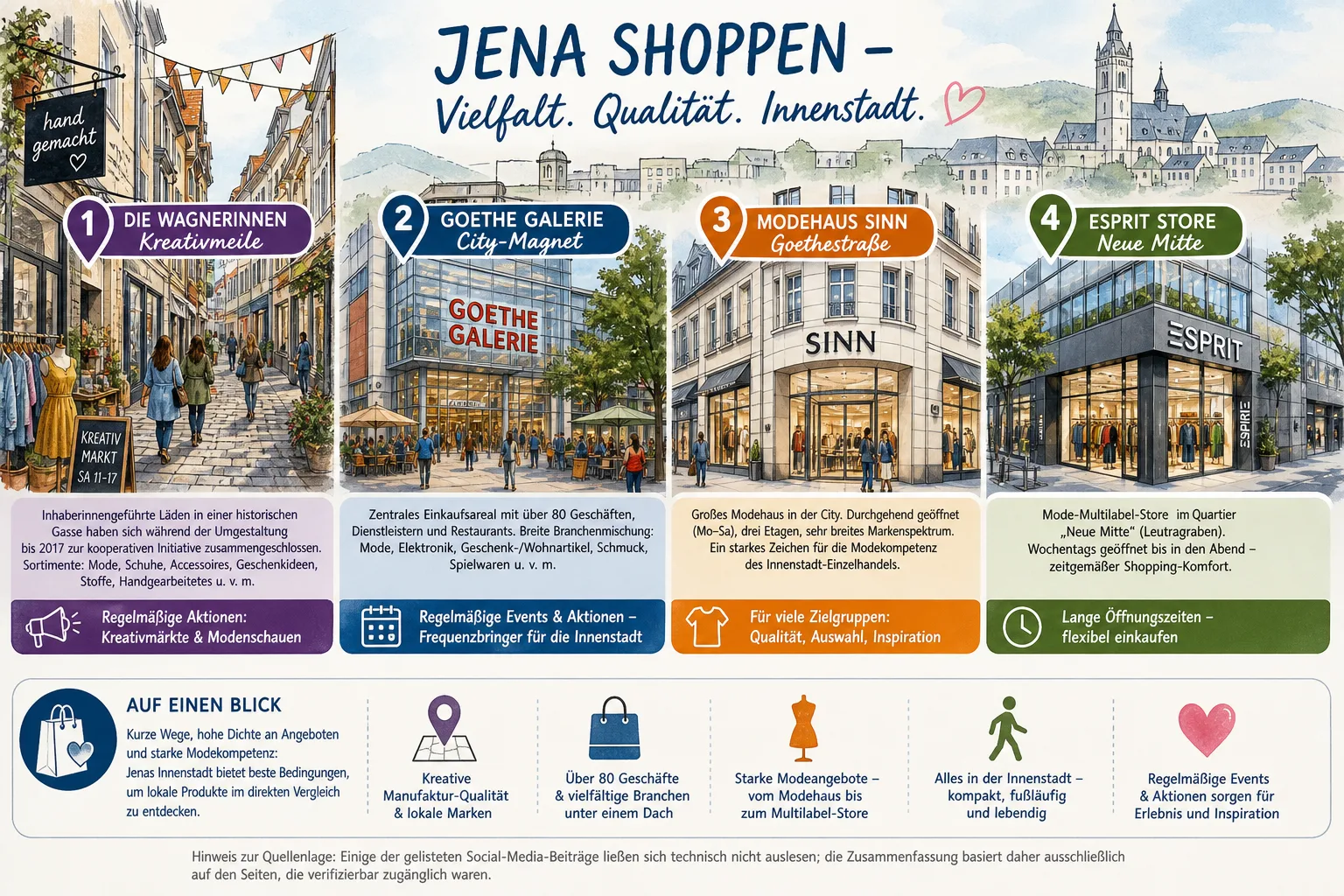
Discover Local Brands & Manufactories in Jena
Discover Local Brands & Manufactories in Jena: What Awaits You Downtown in 2026
A future-oriented guide for everyone who wants to shop consciously in Jena, get to know small labels, and plan upcoming events such as creative markets, themed weeks, or fashion shows.
Where to Specifically Look for Local Labels in Jena
If you want to discover Jena's local brands, a simple route is worthwhile in 2026: Combine central shopping areas (for orientation, foot traffic, and spontaneous errands) with smaller side streets and areas close to the city center (for studios, workshop stores, and curated assortments). Especially off the main paths, you often find the most exciting discoveries.
- Center & Near Downtown: Deliberately plan time to turn off the main axes into quieter streets. Small, personally run shops are often located there.
- Passages & Concentrated Shopping Areas: They are practical if you want to combine “big and small”—first everyday needs, then specifically to labels with their own signature.
- Around Cultural Attractions: Where people stroll (e.g., near gastronomy, exhibitions, or city offerings), small shop window discoveries are often worthwhile as well.
Important for planning: Events and opening hours can change throughout the year. Therefore, check the current information from the respective shops (website, social media, or entry in the Google Business Profile) before your visit.
What You Typically Find at Local Brands
Local manufactories and labels often work in small series or produce unique pieces. In 2026, you can especially look in Jena for offers where material, origin, and processing are transparently explained.
Typical Product Worlds
- Fashion & Textiles: Small series, unique pieces, selected fabrics, often focusing on fit, repairability, or timeless cuts.
- Jewelry & Accessories: Handmade pieces, limited collections, often with direct designer consultation.
- Fabrics, DIY & Handicrafts: Materials and accessories for your own projects—ideal if you want to do more yourself again in 2026.
- Gifts with Character: Curated products where you can tell the story behind them (instead of just “I just bought it”).
Upcoming Occasions: How to Use Events to Meet Labels
If you not only want to shop but also meet the people behind local brands, events are the best starting point. Over the course of 2026, seasonal events, themed weeks, creative markets, or fashion show formats are particularly common in city centers—and especially small labels use such occasions to present new collections or collaborations.
This Is How You Benefit as a Visitor
- Quick Overview: You meet several providers in one day and can directly compare styles, materials, and value for money.
- Direct Insights: You get answers about care, origin, production, and repair—and can make more informed decisions.
- Individual Adjustments: With local labels, special requests (e.g., small changes, custom fit, alternative materials) are often easier to discuss in 2026 than in standardized chains.
Planning Tip: When event announcements are made, look for information on accessibility, participation opportunities, and whether card payment is possible. This will make your visit more relaxed—especially if you want to combine several stops.
Practical Tips for Your Next City Stroll
- Set a Goal: Do you want to find a gift, add to your wardrobe, or just gather inspiration? Having a goal makes selection easier.
- Plan “Discovery Time”: Deliberately allow time for side streets and smaller shop windows—the most exciting labels are often not on the main axis.
- Actively Seek Advice: Ask about material, care, origin, reordering, and repair. Serious providers are happy to explain this transparently.
- Compare Fairly: Handcraft, small series, and good materials are not comparable to mass-produced goods. Therefore, compare not only the price but also processing, service, and durability.
- Note Your Favorites: If you don't want to decide yet: write down the label name, material, and size. This way you can return specifically later.
Conscious Shopping: How to Recognize Quality & Fair Offers
Especially in 2026, when many providers advertise as “sustainable,” a small set of questions helps. You don't have to be a pro—a few clear questions are often enough to better assess the quality of an offer.
5 Questions That Can Help You
- Material: What materials is the product made of (and why exactly these)?
- Care & Repair: How do I care for it properly, and are there repair or alteration options?
- Transparency: Who made it, and how is the production described?
- Durability: Which parts are particularly stressed, and how are they processed (seams, closures, edges)?
- Fit & Everyday Use: Does it fit your everyday life (weather, routes, work environment)—or will it end up unworn?
The clearer you ask about material, processing, and repairability in 2026, the more likely you are to find pieces that will accompany you for a long time—and not just for one season.
Note: This article is a guide for upcoming discoveries and events. Availability, programs, and opening hours may change at short notice. Therefore, check current information directly with the respective providers or official city/tourism channels. If an external guide to editorial standards is available, you can find it here: More information.