
Catherine Foster
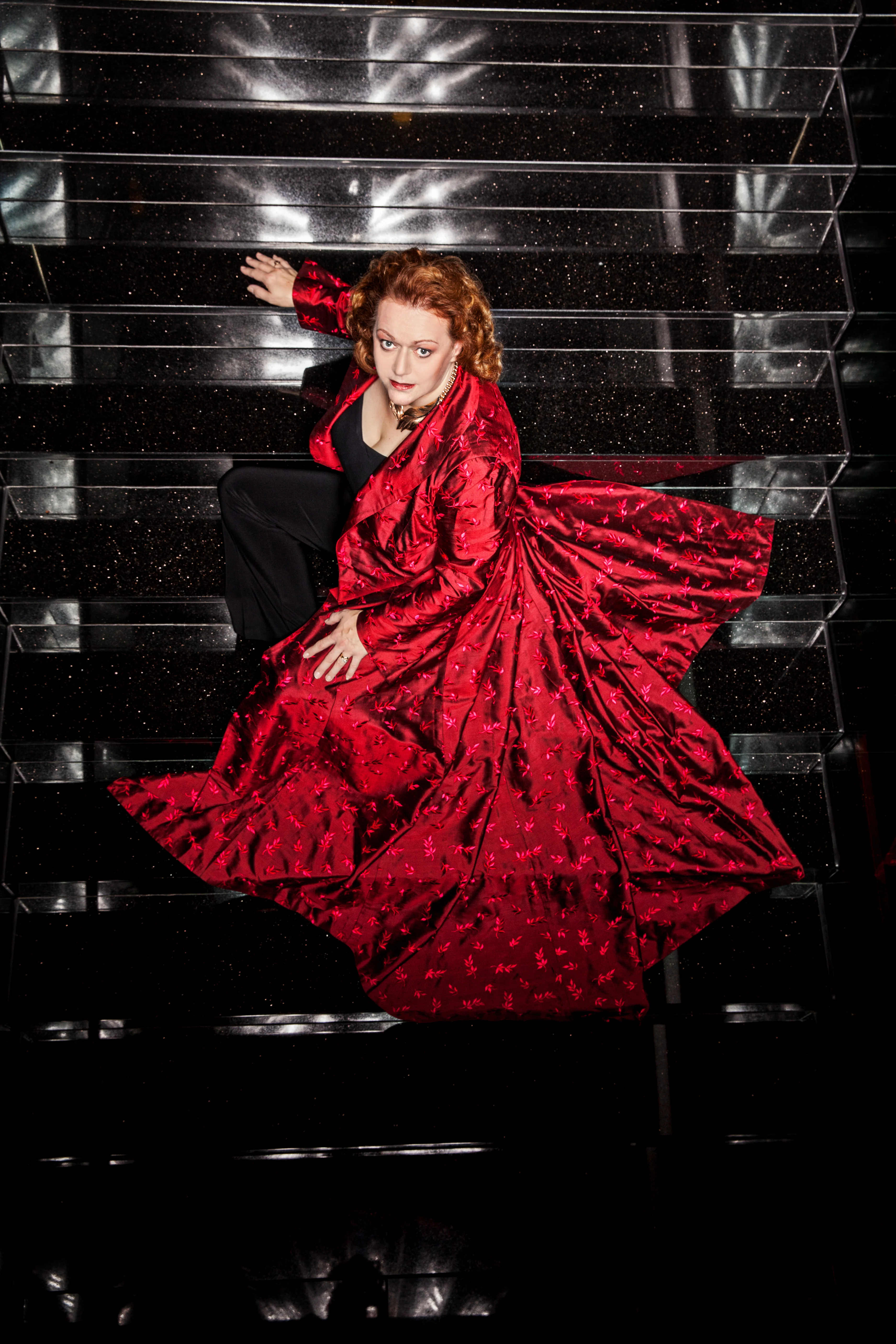
Image from Wikipedia
Image from Wikipedia
Catherine Foster: The British Dramatic Soprano Between Wagner's Intensity and Strauss's Depth
A Singer Who Sings from Experience
Catherine Foster, born in 1975 in Nottingham, has established herself as a prominent British operatic soprano with a place among the standout dramatic voices of her generation. Her artistic development merges an unusual life story with a highly specialized music career: it was only after years in a medical profession that she fully committed to singing and shaped an international operatic career from that. This biography particularly lends her stage presence a rare grounding that is immediately felt in major Wagner and Strauss roles. ([de.wikipedia.org](https://de.wikipedia.org/wiki/Catherine_Foster?utm_source=openai))
From Healthcare Profession to International Opera Stage
Foster began her vocal studies in 1995 at the Birmingham Conservatoire, later moving with a scholarship due to the 'Dame Eva Turner Awards' to the Royal Northern College of Music and completing her training in 1999 at the National Opera Studio in London. Prior to this intense musical training, she initially worked as a nurse and midwife, thus in an environment that would shape her later interpretation of strong, existentially charged female characters. Early on, she performed, among others, as the Queen of the Night in Mozart's Die Zauberflöte, first in Northern Ireland and at Welsh National Opera, and later at the English National Opera. ([de.wikipedia.org](https://de.wikipedia.org/wiki/Catherine_Foster?utm_source=openai))
The transition to Germany became a decisive career step. From 2001 onwards, she was a member of the ensemble at the Nationaltheater Weimar, where she remarkably quickly expanded her repertoire: Mimi, Leonore, Leonora, Elisabeth, Senta, Tosca, the Empress, and more roles charted her journey from lyrical to increasingly dramatic assignments. This development showcases a singer who does not exhibit her voice for quick effects but has gradually built her material towards greater power, endurance, and psychological depth. ([de.wikipedia.org](https://de.wikipedia.org/wiki/Catherine_Foster?utm_source=openai))
The Wagner Moment: Brünnhilde as the Artistic Center
Catherine Foster became internationally known primarily as Brünnhilde. In 2007, she sang the role in the Ring des Nibelungen in Weimar, a production that was released on DVD and imprinted her name on a wider opera audience. The major breakthrough came in 2013 with her Bayreuth debut as Brünnhilde in Frank Castorf's Ring for the Wagner anniversary; afterwards, she returned to the festival for many years and established the role as the core of her profile. ([de.wikipedia.org](https://de.wikipedia.org/wiki/Catherine_Foster?utm_source=openai))
It was particularly at Bayreuth that it became evident how well Foster masters the extreme demands of this role: endurance, clarity of text, steely height, and at the same time dramatic agility. Critiques described her presence as impressively controlled and her interpretation as technically and scenically of a high level. Her interpretation of Isolde at the Bayreuth Festival in Summer 2022 was also very well received by audiences and critics according to available sources. ([de.wikipedia.org](https://de.wikipedia.org/wiki/Catherine_Foster?utm_source=openai))
Repertoire Diversity Between Puccini, Verdi, Strauss, and Britten
Foster's repertoire extends far beyond Wagner. According to her artist agency, it includes, among other roles, Mimì, Leonore in Fidelio, Leonora in Il trovatore, Elisabetta in Don Carlo, Tosca, the Empress in Die Frau ohne Schatten, Senta in Der fliegende Holländer, Turandot, Isolde, Elektra, and the Dyer's Wife. Additionally, significant concert works such as Verdi's Requiem, Mahler's Eighth, Britten's War Requiem, and Beethoven's Ninth are included. This range speaks to a voice that possesses not only power but also stylistic control, breathing economy, and nuanced phrasing. ([hilbert.de](https://www.hilbert.de/en/artists/singers/soprano/catherine-foster/))
As a dramatic soprano, Foster is particularly associated with the German repertoire, but the sources show an artist without rigid genre boundaries. Her career has developed from Mozart through the romantic repertoire to the great high-dramatic roles of the 20th century. This is precisely her charm: she combines classical singing technique with the ability to express great psychological extremes without losing sight of the vocal line. ([de.wikipedia.org](https://de.wikipedia.org/wiki/Catherine_Foster?utm_source=openai))
Current Projects and Artistic Presence
The 2024/25 season ended for Foster with a highly anticipated return to Bayreuth as Brünnhilde under Simone Young. For the 2025/26 season, her agency lists several notable engagements: Tristan und Isolde with the Korean National Opera under Jaap van Zweden, Brünnhilde in a Bayreuth Festival production in Shanghai directed by Katharina Wagner, and revivals of Elektra, Götterdämmerung, and Turandot at the Deutsche Oper Berlin. In addition, she will perform concerts with the Konzerthausorchester Berlin and the Helsinki Philharmonic Orchestra. ([hilbert.de](https://www.hilbert.de/en/artists/singers/soprano/catherine-foster/))
These current commitments highlight an artist who asserts her rank not through nostalgia but through continuous presence on major opera stages. Foster remains anchored in the core of the dramatic repertoire, yet her agenda also shows artistic flexibility and international demand. This is exactly the kind of career opera lovers track: consistent, challenging, and highly relevant in the present. ([hilbert.de](https://www.hilbert.de/en/artists/singers/soprano/catherine-foster/))
Discography and Documented Recordings
Although Catherine Foster is primarily perceived as a stage artist, her discography is of particular interest to Wagner listeners. Among the preserved recordings are The Martyr of Antioch as well as live recordings from Weimar of Die Walküre, Siegfried, and Götterdämmerung from 2008, as well as Siegfried from Hamburg 2009. Furthermore, the Weimar Ring releases on Naxos and other DVD or Blu-ray editions are also documented in retail and catalogs. ([de.wikipedia.org](https://de.wikipedia.org/wiki/Catherine_Foster?utm_source=openai))
These releases have less the character of a popular chart discography and more that of an artistic documentation of significant roles. This is an important quality marker, especially in the classical field: the voice is not measured in single hits but by its persuasiveness in monumental works. In Foster's case, this particularly illustrates how a dramatic soprano voice takes shape over the years and asserts itself in extreme parts. ([prestomusic.com](https://www.prestomusic.com/classical/artists/7080--catherine-foster))
Critical Reception, Awards, and Cultural Influence
The specialized press has described Foster for years as one of the leading dramatic sopranos of her time. Her reception focuses on the combination of vocal authority, text comprehensibility, and stage presence. The sources also mention awards such as the honorary membership of the Royal Birmingham Conservatoire, the Reginald Goodall Award from the Wagner Society of London, and the Australian Green Room Award in 2022 for her portrayal of Elektra. ([hilbert.de](https://www.hilbert.de/en/artists/singers/soprano/catherine-foster/))
Her cultural influence lies particularly in how she shapes the image of the modern Wagner singer: not merely as a powerhouse but as an interpretive artist with life experience, discipline, and psychological credibility. Media reports consistently emphasize her unusual path from healthcare to the grand opera stages of Europe, Asia, and Australia. In this way, Foster emblemizes an operatic art form that inextricably intertwines biography, technique, and expressive density. ([moneycontrol.com](https://www.moneycontrol.com/news/business/wire-news/-1683475.html?utm_source=openai))
Conclusion: A Voice for the Great Existential Roles
Catherine Foster captivates because she has created a significant operatic identity from an extraordinary life path. Her music career combines dramatic intensity, technical sovereignty, and a selection of roles that ranks among the most demanding in the repertoire. Those who want to understand why Wagner and Strauss continue to electrify on stage will find in Foster a singer of rare consistency and presence. Her live performance remains a strong recommendation for anyone who wants to not just hear opera but experience it. ([hilbert.de](https://www.hilbert.de/en/artists/singers/soprano/catherine-foster/))
Official Channels of Catherine Foster:
- Instagram: no official profile found
- Facebook: no official profile found
- YouTube: no official profile found
- Spotify: no official profile found
- TikTok: no official profile found
Sources:
- Hilbert Artists Management – Catherine Foster
- Operabase – Catherine Foster
- Presto Music – Catherine Foster
- Wikipedia DE – Catherine Foster
- Wikipedia EN – Catherine Foster (soprano)
- The Guardian – Catherine Foster and Wagner's Understanding of Roles
- The Spectator – Striking the wrong note
- OperaWire – Interview with Catherine Foster
- Catherine Foster – official website
Upcoming Events
Catherine Foster and Friends
Catherine Foster and Friends: Festive Concert