
Jens Harzer

Image from Wikipedia
Image from Wikipedia
Jens Harzer – the great metamorphoser of German-language theater
An exceptional actor between linguistic artistry, intensity, and stage presence
Jens Harzer, born in Wiesbaden in 1972, is one of the most distinctive actors of his generation. Since March 2019, he has been the bearer of the Iffland Ring, one of the highest honors for stage actors in the German-speaking world. His career combines classical stage work, precise text interpretation, and a rare intensity, which made him a prominent figure on the major stages in Germany, Austria, and Switzerland early on. ([de.wikipedia.org](https://de.wikipedia.org/wiki/Jens_Harzer?utm_source=openai))
Biography: From Wiesbaden’s promising talent to a central figure in contemporary theater
Harzer completed his acting training at the Otto-Falckenberg-Schule in Munich, where he developed an art of attentive, textually accurate performance. From 1993, he was part of Dieter Dorn's ensemble for 16 years, initially at the Munich Kammerspiele and later at the Bavarian State Theater Munich. This long ensemble period laid the foundation for a music career that does not exist for him—however, he has a stage career of exceptional consistency, in which rhythm, breath, and the composition of spoken words play a central role. ([berliner-ensemble.de](https://www.berliner-ensemble.de/person/1001?utm_source=openai))
Even in this early phase, Harzer worked with influential directors such as Peter Zadek, Andrea Breth, Luc Bondy, and Jürgen Gosch. Guest performances took him to the Schaubühne Berlin, the German Schauspielhaus Hamburg, Schauspiel Frankfurt, the Salzburg Festival, the German Theater Berlin, and the Burgtheater Vienna. These stops showcase an actor who refused to be confined to a single ensemble or aesthetic, creatively connecting different schools of theater. ([berliner-ensemble.de](https://www.berliner-ensemble.de/person/1001?utm_source=openai))
The breakthrough: Roles that set standards
Key moments of his career include the role of Marquis de Posa in Schiller's Don Carlos, directed by Jette Steckel, for which Harzer was named "Actor of the Year" for the second time in 2011. Previously, he had already attracted attention with his portrayal of Astrow in Chekhov's Uncle Vanya at the German Theater Berlin; in 2008, he was awarded "Actor of the Year" for this role. Such accolades reflect less a star system than artistic authority: Harzer impresses with precision, psychological depth, and the ability to make contradictory characters both transparent and mysterious. ([berliner-ensemble.de](https://www.berliner-ensemble.de/person/1001?utm_source=openai))
His collaboration with Johan Simons also became an important chapter. In productions like Deutschstunde and later works, Harzer showcased a sharply contoured, often quiet, but highly charged style of acting. Reviews highlighted his ability to not just portray characters but to make their inner conflicts audible. Especially in large literary adaptations, it becomes clear how much Harzer's art thrives on text analysis, linguistic musicality, and controlled expressiveness. ([archiv.thalia-theater.de](https://www.archiv.thalia-theater.de/beitraege/469?utm_source=openai))
Thalia Theater Hamburg, Iffland Ring, and late maturity
In 2009, Harzer joined the Thalia Theater Hamburg, where he remained a defining ensemble member for many years. Here, he worked with Dimiter Gotscheff, Stefan Pucher, Luk Perceval, and Leander Haußmann, among others. His years in Hamburg consolidated his reputation as an actor who treats classics and contemporary material with the same seriousness and creates an extraordinary inner tension on stage. ([berliner-ensemble.de](https://www.berliner-ensemble.de/person/1001?utm_source=openai))
Since 2019, he has held the Iffland Ring, succeeding Bruno Ganz. This honor is more than just an award: it highlights Harzer's position in German-language theater and underscores his status as a reference figure for today’s spoken and ensemble theater. His upcoming move to the Berliner Ensemble in 2025/26 marks another important step in a career that has not lost its artistic urgency even after decades. ([berliner-ensemble.de](https://www.berliner-ensemble.de/person/1001?utm_source=openai))
Current projects and artistic presence
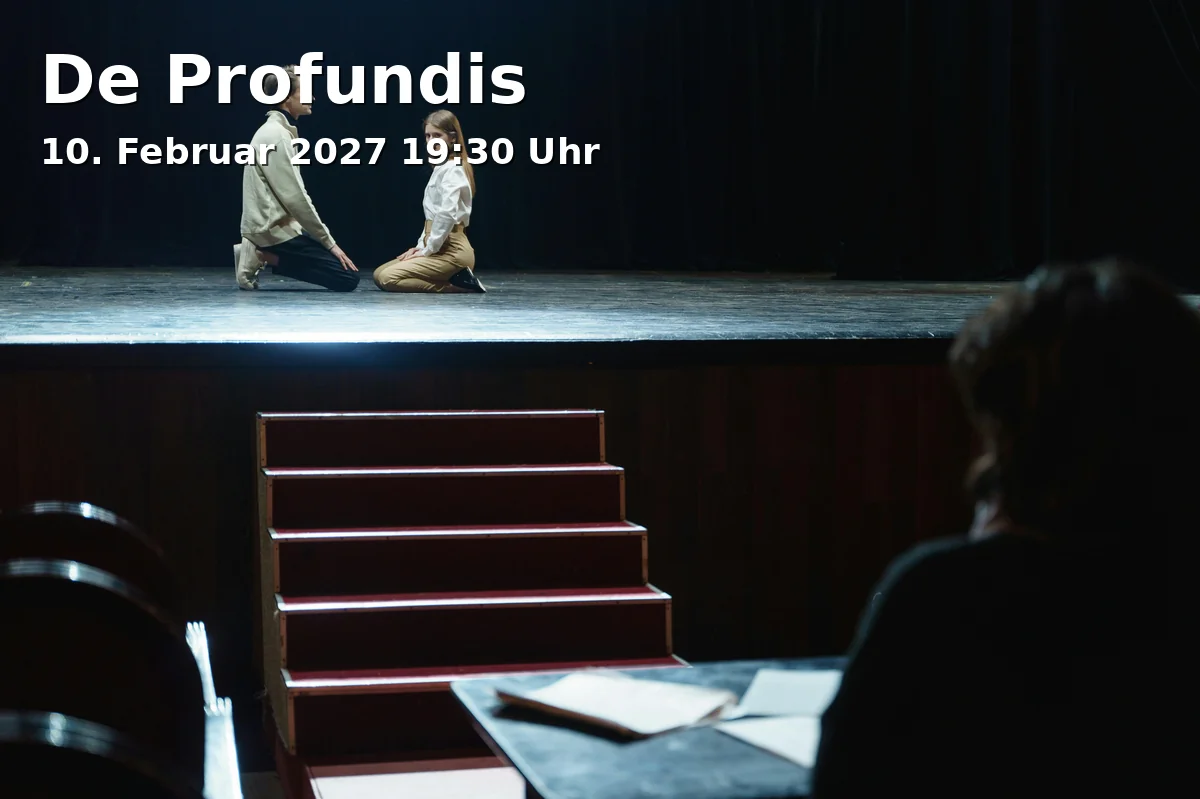
Among Harzer’s recent works is De Profundis at the Berliner Ensemble, a solo based on Oscar Wilde that focuses on his delicate sensibility and great text discipline. The theater describes the production as an intense solo that reveals Harzer's playful intelligence and his subtle, fractured precision. Such works showcase an artist who does not rely on external showiness but on depth, presence, and the ability to keep complex thoughts in motion on open stage. ([berliner-ensemble.de](https://www.berliner-ensemble.de/inszenierung/de-profundis?utm_source=openai))
In 2024, it was also announced that Harzer would leave the Thalia Theater following the conclusion of Joachim Lux's directorship at the end of the 2024/2025 season; concurrently, other guest performances and projects are documented, including Srebrenica – I counted my remaining life in seconds .... The Berliner Ensemble has announced his firm return in 2025. His current profile remains clear: a theater artist who navigates between major institutions, literary solos, and demanding ensemble works. ([de.wikipedia.org](https://de.wikipedia.org/wiki/Jens_Harzer?utm_source=openai))
Style and acting art: Language as material
Harzer's performance is characterized by a rare combination of concentration and openness. He does not work with loud gestures, but with precise intensity: small shifts in voice, posture, and gaze suffice to transform characters. Reviews and portraits repeatedly describe him as finely tuned, sensitive, and simultaneously controlled; it is precisely this tension that makes his stage presence so distinctive. ([berliner-ensemble.de](https://www.berliner-ensemble.de/inszenierung/de-profundis?utm_source=openai))
His repertoire ranges from Chekhov to Schiller to Oscar Wilde and Peter Handke. In these works, it becomes evident how deeply Harzer understands the musical structure of language: pauses, repetitions, accelerations, and condensations become scenic tools in his hands. This endows his roles with a clear dramatic architecture and makes him equally interesting for directorial signatures of different styles. ([berliner-ensemble.de](https://www.berliner-ensemble.de/person/1001?utm_source=openai))
Cultural influence and critical reception
Harzer is far more than an outstanding performer of individual roles. He represents an understanding of theater based on intellectual precision, ensemble spirit, and literary depth. Press reviews regularly praise his power to open complex characters without overinterpretation, and his presence in productions like Deutschstunde or Platonow has solidified the reputation of an actor who not only masters the great German theatrical texts but also makes them newly experienceable. ([archiv.thalia-theater.de](https://www.archiv.thalia-theater.de/beitraege/469?utm_source=openai))
His significance is also apparent outside the stage: he has appeared in film and television productions, including Babylon Berlin and Tatort. Nevertheless, his center of gravity remains distinctly the theater, where his artistic development is most clearly visible. It is precisely this consistency that grants him authority: Harzer is no all-round star but a stage artist of extraordinary integrity. ([tagesspiegel.de](https://www.tagesspiegel.de/berlin/kultur-trager-des-iffland-rings-theaterstar-harzer-jetzt-in-berlin-14280335.html?utm_source=openai))
Discography? Not for Jens Harzer – but rather an impressive stage and filmography
A musical discography in the strict sense does not exist for Jens Harzer, as he is not a musician. His artistic work unfolds in theater roles, readings, film and television appearances, and literary solo formats like De Profundis. Those searching for “hits” will not find charts with Harzer but roles that resonate in the audience's memory and continue to have an impact in the German-speaking theater canon. ([berliner-ensemble.de](https://www.berliner-ensemble.de/person/1001?utm_source=openai))
It is precisely this form of relevance that makes him intriguing: Harzer does not aim for short-term attention but for artistic permanence. His career tells a story of discipline, precise role interpretation, and a stage presence that brings texts to life. Anyone who loves acting as the art of listening, speaking, and transformation will find in Jens Harzer one of the most convincing interpreters of our time. ([berliner-ensemble.de](https://www.berliner-ensemble.de/person/1001?utm_source=openai))
Conclusion: Why Jens Harzer continues to fascinate today
Jens Harzer is an actor who embodies greatness without noise. His career combines ensemble loyalty, radical role work, and an unwavering sense of language, making him one of the most important voices in German-language theater. His art unfolds most strongly in live performance: in the immediate connection between stage, text, and audience. Anyone who has the chance to experience him on stage should seize it. ([berliner-ensemble.de](https://www.berliner-ensemble.de/person/1001?utm_source=openai))
Official channels of Jens Harzer:
- Instagram: No official profile found
- Facebook: No official profile found
- YouTube: No official profile found
- Spotify: No official profile found
- TikTok: No official profile found
Sources:
- Berliner Ensemble – Jens Harzer
- Berliner Ensemble – Jens Harzer moves to the Berliner Ensemble in 2025
- Berliner Ensemble – De Profundis
- Berliner Ensemble – De Profundis (PDF)
- Thalia Theater – De Profundis
- Thalia Theater – Press reviews for Deutschstunde
- Thalia Theater – Deutschstunde
- Thalia Theater – Press reviews for Platonow
- Thalia Theater – Press reviews for Immer noch Sturm
- Wikipedia: Jens Harzer – Image and Text source
Upcoming Events
Radiant Sounds
De Profundis